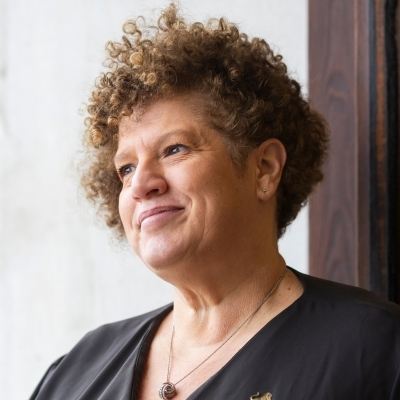

If the Londra Palace were a ship, Alessandra would be its chief helmswoman, keeping us on course, with warmth and empathy, whatever the weather and tides may bring. Asked to suggest something about her native Venice that is close to her heart, she nominates the city’s rich culinary traditions, which she associates with that great source of many of our deepest taste memories – la cucina di mamma e papà. Here are two of Alessandra’s piatti del cuore, or dishes of the heart.
Baccalà mantecato – creamed cod. “It’s as Venetian as the Bridge of Sighs. My dad used to make it from scratch. He’d buy a nice piece of stockfish, rinse it repeatedly in water to desalt it, boil it in milk and water, then he’d get a chair and sit by the pan for half an hour mixing the olive oil into the flaked cod with a huge wooden spatula that his father had made”.
Sarde in saor con polenta – sweet and sour sardines with polenta. “Mum would always prepare these marinated sardines a couple of days in advance and leave them to rest to enhance the flavours. She’d serve them with polenta that she would cut into slices on a big wooden chopping board. Polenta is another preparation that needs a lot of stirring – and strong arm muscles! It’s traditionally made in a deep copper pan – ours was a family heirloom, made by my maternal nonno, who worked in a boatyard”.
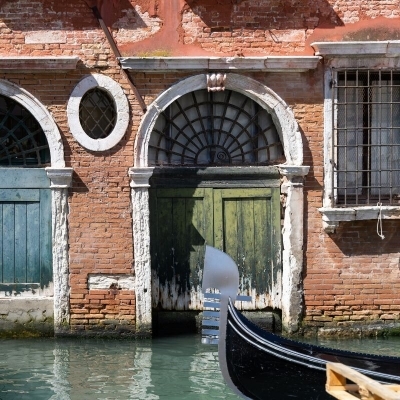
northern cannaregio
Asking our beloved Alvise to nominate an area of Venice that has a place in his heart is a bit like asking a parent to name their favourite child. But after some gentle persuasion, Alvise homes in on a district he has a lot of affection for and considers to be still relatively undiscovered: Northern Cannaregio.
This area that takes in Venice’s famous Ghetto Ebraico or Jewish Ghetto is, Alvise tells the Gazette, “one of those parts of the city where you can really get in touch with the Venice of the Venetians”.
He suggests taking in the district’s unhurried charm by simply strolling along the wide quays that line its long canals, past artisans’ workshops, cafés, wine bars and restaurants. But he also recommends a couple of stops outside the Ghetto with its historic synagogues and extraordinary ancient ‘high-rise’ residential buildings.
One is the church of Madonna dell’Orto, its interior adorned with a series of transcendent canvases by local painter Tintoretto. Another is the secluded lagoon-facing garden known as the Ex-Cottolengo, which can be visited by ringing the bell of a local convent and leaving a small offering.
Last but not least is the wonderful ‘Dalla Marisa’ trattoria, near the Ponte Tre Archi bridge, which has been a part of Alvise’s life ever since he was a kid. “This is one of those places where you can find real Venetian home cooking, including some meaty specialities that can be difficult to find in this city of fish and seafood”.
Alvise’s final piece of advice if you find yourself in Northern Cannaregio is “to seek out the delightful Ponte Chiodo – one of only two bridges in Venice without a parapet. You need to take a long boat trip to see other one: it’s on the island of Torcello”.